
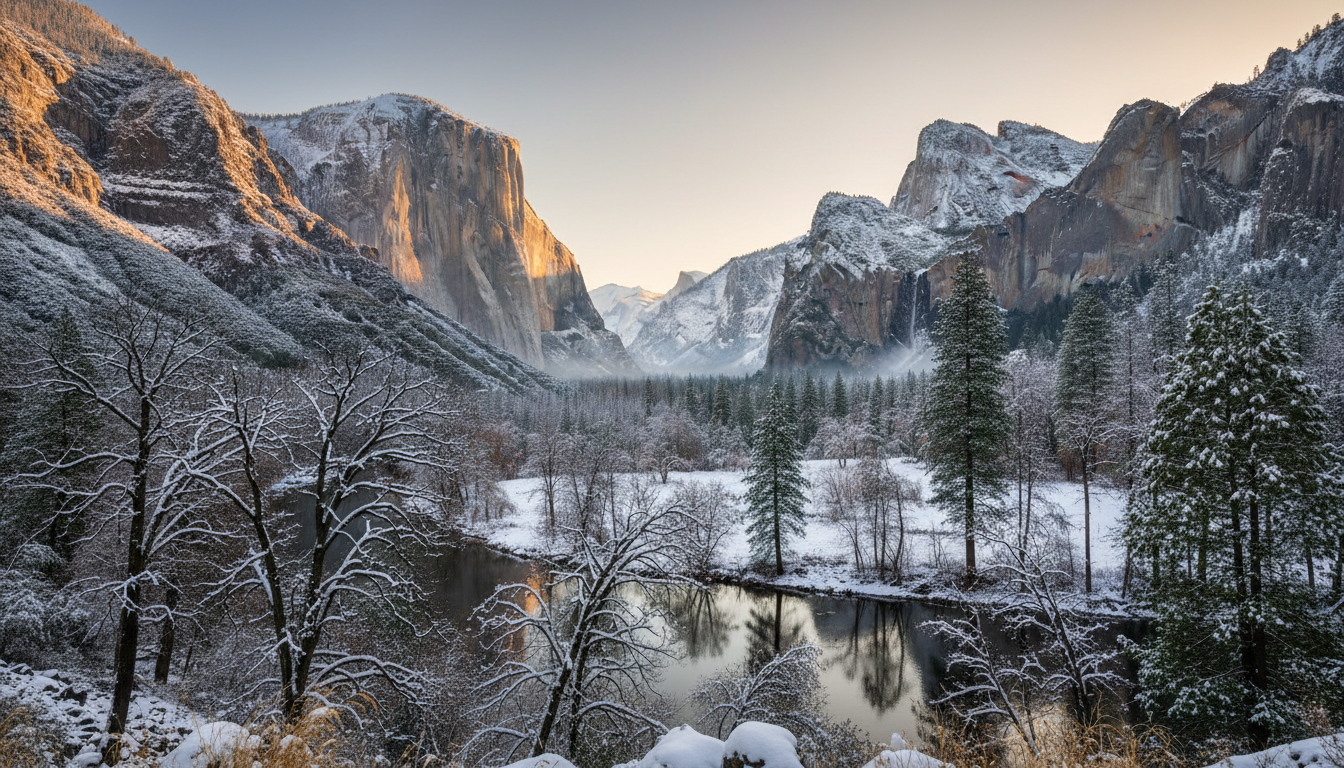
Winter conditions can show up in Yosemite from November, and they change how you should pack. Days in the valley are often mild, nights are freezing, and the same trip can include dry trails, icy shade and a snowy drive. This guide covers what to bring, how to stay safe, and what to do once you’re there.
What winter weather to expect
The National Park Service says winter conditions are common from November through March. In Yosemite Valley, average highs are around 50°F (10°C) and average lows around 30°F (-1°C), and snow is usually present at about 6,000 feet (1,830 m) and above. The high country is 10 to 25 degrees colder than the valley and gets several feet of snow.
The practical lesson: dress for the coldest part of your day, not the warmest. A sunny 50°F afternoon can drop below freezing within a couple of hours of sunset, and shaded trails can stay icy all day.
What to pack
- Layers, not cotton. The NPS recommends wool or synthetic clothing. Add an extra jacket, a hat and gloves, and keep rain gear handy.
- Traction for your boots. Slip-on traction devices and trekking poles make icy paths much safer.
- A headlamp with spare batteries. It gets dark early, and cold drains batteries faster.
- Water and high-energy snacks. Carry more than you think you need, plus an extra snack in case a short walk turns into a long one.
- Sunglasses and sunscreen. Bright snow and granite reflect a lot of light.

Driving: carry chains
Chain requirements can apply to any vehicle, anywhere in the park, when roads are snowy or icy, and they are most common from November through March. Carry chains that fit your tires even if the forecast looks clear. For current road and chain information, call 209-372-0200 (press 1, then 1) before you leave. Our guide to driving to Yosemite in late fall explains the rules and which roads close for the season.
As of the NPS conditions update on November 6, the Half Dome cables were down for the season, and Tioga Road and Glacier Point Road were still listed as open. Both usually close once snow stays, so don’t plan around them.
Winter things to do
You don’t need to hike far to enjoy a winter visit. The NPS winter activities page lists several options:
- Ice skating at Curry Village. The rink is listed as open from mid-November to mid-March, conditions permitting.
- Snowshoeing and cross-country skiing. Beyond Badger Pass, Glacier Point Road is groomed for skiers and snowshoers once it closes to cars. Marked routes generally have enough snow from mid-to-late December through mid-March. If you snowshoe, stay at the edges of the groomed road, outside the ski tracks.
- Downhill skiing. Badger Pass runs from mid-December through March, conditions permitting. Read our guide to skiing Badger Pass for lifts, tickets and tips.
- Easy walks in the valley. Lower Yosemite Fall, Cook’s Meadow and Mirror Lake are short and a good fit when the ground is wet or icy. For longer ideas, see the best Yosemite Valley hikes when the high country closes.

Staying safe
- Tell someone where you’re going and when you expect to be back.
- Turn around early. Winter days are short, and trails that take two hours in summer can take longer on ice.
- Keep away from steep snow slopes. The NPS advises against going on or under slopes steeper than 20 degrees unless you are trained in avalanche avoidance and rescue.
- Store food properly. The NPS notes that bears are active throughout the park.
- For overnight trips, you need a free wilderness permit, and winter backpacking usually means snow camping on skis or snowshoes. Permit reservations are not available from November through April, so pick one up in person.
With the right layers and a flexible plan, winter is a good time to see the park without the summer crowds.
Information checked November 10, 2026, against the National Park Service pages for current conditions (last updated November 6), winter activities, winter FAQ and wilderness in winter. Conditions change quickly, so check the NPS before you go. The images in this post are illustrations, not photographs.
Leave a Reply